Thursday, August 26, 2010

Back To Where It All Began

The first commercial kitchen I ever cooked in was at a hippie alternative community dance camp called Dance New England (DNE), starting when I was 6 years old.  Everyone in the community was required to help out with cooking, cleaning and making the 10 day summer gathering happen. The food I remember from the early days was what I now think of as Moosewood cuisine (as in the cookbook and restaurant). I remember blackstrap molasses, steamed vegetables, buckets of tahini, brown rice, peanut butter, and lots of bodies cooking, dancing, swinging, and kids running in the woods dressed in costumes and covered in face paint. Over the next 30 years, the camp grew a lot and moved into the post hippy era. I cooked in the camp kitchen almost every summer till I was about 26 years old. Many great cooks passed through that kitchen. People from Omega and Kripalu Institute's kitchens, cooks schooled in macrobiotics, delicious vegetarian cooking, organic, inspired, reinvented, fresh cooked healthy, tasty food. I remember there being about 6 cooks in the kitchen each summer with dozens of volunteers cycling through in 3 hour shifts for their kitchen chores. Feeding 300-500 people with a staff of volunteers is an incredible feat!

Over the past 10 years, I have only been to dance camp twice, and this year was the first time with both my children. It was great to be back. My time in the kitchen this year was limited to a few short stints, not the exhausting long days cooking for 500 people that the head cooks were pulling. The DNE kitchen was and is a special place. I certainly owe much of my comfort in the kitchen to the years I spent helping out in there as a kid, teen and young adult. Cooking from scratch without recipes, following directions, giving directions and learning how to cook good food in large quantities to feed a whole community. Meals were cooked with attention and respect to allergies and various diets long before the terms gluten free and vegan were as mainstream as they are now. The lessons I learned in this kitchen about cooking, and in this community about life and cooperation have served me very well, and I am grateful.

The first Charlie, now "Chaz" making bread for 500 people daily. Some wheat, some spelt.

The fabulous lunch salad bar. Who would have a hard time eating well 
with these wonderful options waiting for them?!


The Kitchen in action
 The large immersion blender, once you use one, you'll never go back!

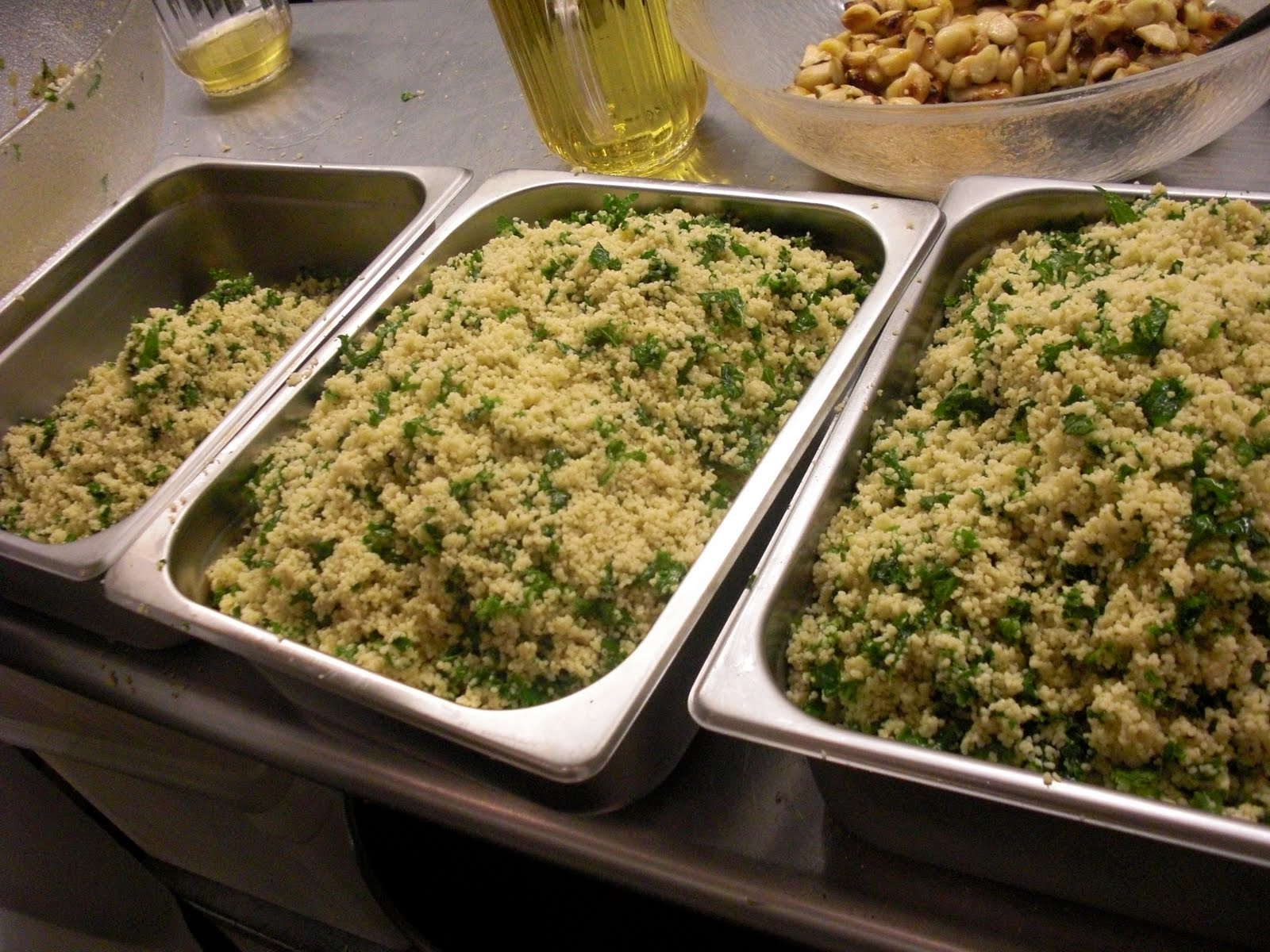
Did you know that you can "cook" kale by massaging it with a little salt and oil? Simple, fresh and delicious. Here we mixed it with some leftover cous cous, lemon juice, roasted garlic and herbs. I remember first learning this technique many years ago, and thinking the cook who
told me to do it was a little wacky, but no, it works and is great!
 Thank you to all the 2010 cooks and community members from Dance New England who fed us for the last 10 days, we miss all that great food already!

Tuesday, August 10, 2010

Do You Know About The Dirty Dozen?

When I go to the grocery store or farmers' market I look around at the food and wonder what was done to it before it got to the store cooler or market table. Did it come from a huge farm where the soil was mixed with chemical fertilizers and the plants sprayed with pesticides? Did the farmer spray the fruit directly with pesticides or not? If I eat this food, and serve it to my kids how much of those chemical fertilizers and pesticides will we be ingesting? 

While I like to grow some of my food, and I prefer to buy food that is grown with organic or other sustainable farming practices, I can't always find everything organic or ecologically grown, and even if I do, I can't always afford to buy it.  I use this Shopper's Guide to Pesticides put together by the Environmental Working Group to help me prioritize which produce I should try and buy organic. The "dirty dozen" side of the list shows produce with the highest levels of pesticide retention after they are grown, and washed. The "clean 15" side shows produce that has the lowest levels of pesticides. Most conventionally grown food (anything not labeled organic) is grown not only with pesticides, but also herbicides and chemical fertilizers. Some produce is grown "sustainably" or using Integrated Pest Management (IPM), which is a process of creating healthy crops through a variety of agricultural techniques to help minimize the use of chemical pesticides and fungicides. You can always try asking the produce worker at your grocery store or the farmer at the market about how the food was grown. A farmer might tell you that they sprayed their peach tree when the flowers were in bloom, but have not sprayed them since the fruit was on the tree, so they are using minimal amounts of chemicals and there should be none on the fruit itself.

Some people say that this list might scare people from eating fruits and vegetables at all. I think that it is important for people to be informed about what they are purchasing and eating, and to make decisions that allow them to balance out the amount of high pesticide residue and low residue foods they eat. For example, I love strawberries, but once the small window for local  IPM strawberries is gone, I can only afford to buy organic ones on occasion, so I sometimes buy conventional ones (with chemical residue) but only on occasion, and the rest of the time I use frozen organic ones or choose a different fruit that is lower in chemical residues. If I didn't know that strawberries were high in pesticides, then I would be feeding them to my children regularly, and that is a lot of chemicals for a little body to handle.
For a complete list of all the 49 types of produce tested by EWG, click here.


Here is some info about the Shopper's Guide to Pesticides:

Why Should You Care About Pesticides?
The growing consensus among scientists is that small doses of
pesticides and other chemicals can cause lasting damage to human
health, especially during fetal development and early childhood.
Scientists now know enough about the long-term consequences of
ingesting these powerful chemicals to advise that we minimize our
consumption of pesticides.

What’s the Difference?
EWG research has found that people who eat five fruits and
vegetables a day from the Dirty Dozen list consume an average of
10 pesticides a day. Those who eat from the 15 least contaminated
conventionally-grown fruits and vegetables ingest fewer than 2
pesticides daily. The Guide helps consumers make informed choices
to lower their dietary pesticide load.

Will Washing and Peeling Help?
The data used to create these lists is based on produce tested as
it is typically eaten (meaning washed, rinsed or peeled, depending
on the type of produce). Rinsing reduces but does not eliminate
pesticides. Peeling helps, but valuable nutrients often go down the
drain with the skin. The best approach: eat a varied diet, rinse all
produce and buy organic when possible.

How Was This Guide Developed?
EWG analysts have developed the Guide based on data from nearly
96,000 tests for pesticide residues in produce conducted between
2000 and 2008 and collected by the U.S. Department of Agriculture
and the U.S. Food and Drug Administration. You can find a detailed
description of the criteria EWG used to develop these rankings and
the complete list of fruits and vegetables tested at our dedicated
website, www.foodnews.org.

THE POWER OF INFORMATION
Headquarters 1436 U St. N.W., Suite 100 Washington, DC 20009
(202) 667-6982
Learn More at FoodNews.org

Monday, August 9, 2010

Dinner From the Garden + Bacon (and other food ramblings)

Sorry I haven't posted for a while, the kids were both sick (now I am) and I've been really busy trying to get our new menu ready at work. Thought I'd share a recent, fairly typical summer dinner with produce from our garden and the local farmers' market. Just picked lettuce (from the garden)with blanched broccoli (from the market), zucchini sauteed with thai basil (from the garden), basmati rice and some neiman ranch bacon (from the grocery store) crumbled on top. A little splash of good vinegar, and we had dinner.

I try on occasion to practice what I preach about food. Now don't think that  I manage to eat this way at every meal, but it is what I strive for. When people ask me about how to eat healthy food, I usually tell them to try and eat fresh whole foods, things that didn't come out of a box, they don't even have a nutritional label, because there are no ingredients. I also describe the idea that if you strive to have half of your meal be fruits or vegetables and the other half divided by grains and proteins, then you'll have a great healthy meal. This bowl is a little light on the protein, some marinated white beans would have been a good addition to round out the meal, but, you get the idea...

Note about pork:
While I'm jewish, pork was not off limits at either my mom's (mostly vegetarian) or my dad's (mostly carnivorous) houses growing up.  I have memories of eating salami and peperoni as a kid, my mom even sent me to school in second grade with a matzoh sandwich filled with butter and salami, (could it get any more unkosher?!). Around the age of 12 I started eating a mostly vegetarian diet. In college I was even vegan for a while. That started to change as I began cooking professionally in restaurants  after college in the mid 90's. There was so much good quality meat and it started to smell good to me after a while. At one catering company I worked at up in Boston, each week I had to cook dozens of racks of lamb. I would marinate the lamb overnight in fresh garlic, lemon and orange zest, fresh rosemary and thyme, then sear them in a very hot pan, slather each with dijon mustard and coat them in buttered bread crumbs. I'd serve them up at wedding after wedding, bar mitzvah after bar mitzvah, only to watch the guests and wait staff drool over them. I had never even tasted them, and then one day I couldn't resist, and man was that a delicious piece of lamb! Pork on the other hand still seemed like a taboo. The time I'd spent in Israel after college ingrained in  me the feeling that pork was dirty meat, and despite how good I knew bacon tasted, I just didn't have the desire to eat it, that was until I was pregnant with my second child. I started craving cured pork, salami, bacon etc, but after reading up on the horrible treatment of pigs in commercial feedlot farms (see below), there was no way I could eat the regular meat sold at most grocery stores. On occasion I have a little bit  of pork if it comes from a pig that was sustainably raised, and slaughtered in a "humane" way. 

I can still only stomach a small amount of cured pork at a time, I guess I'm just not used to the fattiness of it. This is some delicious house-made cured pork from Franny's in Brooklyn where I went to eat again after may years away, and it is still fabulous! Great Pizza, even by New Haven standards, and great non-pizza food made with local ingredients from the farmers' markets and sourced from local farms. This plate was shared by the whole table, but I still got a stomach ache afterwords. They also had fabulous roasted eggplant with lemon and almonds, spicy sauteed calamari and homemade celery or cherry soda, delicious!


If you want to learn more about how pigs or other animals are raised in many of the large feed lot farms, the ones that supply much of the pork and meat in our country, check out TheSustainableTable.com website and look under issues.

Thursday, July 29, 2010

Garden Update July 2010

 I thought it was about time to share some garden pictures from this summer. The garden has survived the heat wave, and we are past our first crop of summer foods. My backyard plot gets limited sun, so many things grow a little later than normal. Our strawberries are long gone, sugar snap peas are just finishing, snow peas and shelling peas are done, tomatoes are just starting to ripen, the first round of lettuce is getting tall, but still edible, and the second crop is ready for some picking, the green bean plants  are small with a few moderately edible beans showing their faces, the cucumbers have exploded everywhere, zucchini plants are large with lots of flowers but no squash (hmmmmm,...?) carrots and celery are growing well, the raspberry plot is huge and heavy with unripened berries and bumblebees, the herbs are flourishing, the apple trees are struggling along, the grape vine has gorgeous leaves and sad fruits, and the blueberry bushes are happy to be in their new spot out of the shadow of the abundant raspberries. So far it has been a productive season for our little urban lot, with some good harvests, a few diseases, some great dinners and snacks, and a lot more good food to look forward to. 
I sometimes dream of spending my days working on a farm. I have done enough short stints on farms to know that my day dreaming about farm work is not entirely grounded in reality, and that the idea that working a farm would be less stressful than the work I do now, well, it is just a different kind of stress.  I am very thankful that my lively hood is not at the whim of mother nature everyday. The fungus or drought or bugs that infest our organically grown backyard garden, have a small impact on our lives. If I have to pull out all of my yellow grape tomato plants due to fungus (as I did this year) I haven't lost a percentage of my income. If my zucchini plants keep not producing squash, I can still pay my bills. If all my grapes are turning black and shriveling up, I haven't lost this year's wine crop, I just read up on grape disease and try to prevent it next year. 
The fungus that wilted my yellow grape tomatoes, and the black rot on our grapes. This year's losses.

I have been gardening in pots for many years, but in a yard, in the earth for only 4 years. Each year there are some great successes, and a few losses. Having a backyard full of food is exhilarating, beautiful, delicious, nutritious and cheap. This year we made the investment to build raised beds which I describe in detail in this post from May, that investment will last us for years. Each year we purchase a few bags of manure or compost to enrich the garden and harvest some from our own compost pile. I buy a few packets of seeds and some seedlings from the Common Ground School Spring Farm Festival or from some local garden shops, and then add water and weeding. A few of the plants in our garden were gifts from friend's yards (thank you Doug). A small stem of raspberries quickly turns into a patch, and a small grape vine will grow to cover a fence in just a few months. The marigolds are grown from dried flower heads picked off the Edgewood School Garden last year. They are an incredible variety, robust and hearty (they also help keep some bugs away from our plants).
The raised beds, soil and compost which were our start up costs for this year were about $250. The plants and seeds, about $30. In a normal year when we are not building the garden beds our annual costs would be somewhere around $50-$75 dollars, and could be a lot less if I started learning how to save seeds and if we paid a little more attention to our compost pile.

I have been entertaining ideas of growing food through the winter, using plastic sheeting as row covers. I'm starting to think about which hearty greens to grow through the winter, like spinach and kale, and maybe some carrots or other root crops as well. I took a workshop at a CT NOFA conference a few years back with an incredible farmer from Lebanon, CT who covers most of his farm land in row covers and hoop houses and grows food all winter long. He was an inspiration, and I have been promoting his work to every home gardener, school garden and farmer I know, so maybe it is time that I do it myself!
So, the point of all of these ramblings is to say that growing food in your backyard or in pots on your stoop is simple and inexpensive, and it can add an enormous amount of pleasure and delicious healthy food to your life. I hope you all are growing something good to eat, or at least entertaining the idea...

For resources on how to grow your own food contact your local garden center, organic farming organization, master gardeners program, farmers' markets, state extension program, or maybe try asking your neighbors.
You can also check out the resource guide in the cookbook I created: New Haven Cooks/Cocina New Haven, available to purchase on the CitySeed website.

Please share about food you've grown this year, successes or losses, 
first tastes or other fun garden  related stories.

Monday, July 26, 2010

"The Easiest Chocolate Ice Cream...Ever", no machine required, thanks to David Lebovitz

Just thought I'd share this ice cream recipe from David Lebovitz that popped up in my in-box. It is a nice way to make ice cream without an ice cream maker, and you don't need to open the freezer 20 times to stir it. It contains alcohol, which is what keeps the ice cream from freezing solid. He writes with wit and pleasure, so is always fun to read. Notice the 196 word instructions on how to peel a banana, and then the disclosure to follow.

This is a good recipe to use as a base for experimentation. Have fun!
photo by David Lebovitz

Thursday, July 22, 2010

Blue State Coffee -A sneak peak at one of my new projects


A glimpse of my desk at Blue State Coffee. Endless spreadsheets and product catalogs for pricing and sourcing all the basics for a commercial kitchen. Almost done and ready to get in the kitchen and cook!

There is a lot going on in my professional food life these days. I haven't been blogging much about it, because well, at night when I'm blogging it is nice to get lost in thoughts of my garden and family, not spend more time thinking about all the many things that need to be done during the day... 

My professional life seems to be occupied by numerous unpaid projects that I try to squeeze in between paid work and parenting. One very exciting development in the past month is that I am now the Chair of the New Haven Food Policy Council, which I have been a member of for the past four years. Becoming chair has made me feel reinvigorated about the important work the council does and working with this great group of people! More on that later...
 
Fortunately, I have a cool paid job at the moment as well. Blue State Coffee recently took over the cafe spot next to Ashley's on York St. They hired me to help them develop a locally sourced fresh menu of sandwiches, salads, and baked goods for their York St and Wall St locations. The cafe is already up and running with great fair trade and some single origin coffees and teas. The food is still the menu from the Public Cup which has some nice items on it that many people have asked me not to change, like the Curry Tempeh Wrap and the Spinach and Strawberry Salad. There is so much to consider in developing a new menu, and sourcing local and seasonal foods. For example, the delicious salad I just mentioned has strawberries in it, which are in season in the northeast for all of about 1 month, after which time they are trucked in from across the country, often from California, or grown in green houses heated with oil in other closer locations. So, do we make an exception and have strawberries year round because the salad is so popular, do we substitute with other seasonally available fruits or just carry the salad when regionally grown strawberries are around in the spring, and early summer? The answer is not so easy. 
 Tasting local fare. Burrata cheese from Liuzzi's in Hamden, a thin layer of fresh mozzarella surrounding a creamy salty center, locally made using hormone free milk. Rustico roll from Judies, a crusty ciabatta, and some honey and greens....maybe the start of a new sandwich....

Now, try thinking this way about every ingredient on a menu, also taking into account, flavor,  farming practices, genetically modified foods, small family businesses vs. large corporations, the bottom line, and a short time line. Needless to say it is a complicated and interesting challenge. At the moment I am finishing up price checking every single item we will purchase and cataloging all the product numbers so that we can order food from distributors, tasting bread samples from Judie's and Fabled Foods, checking on produce availability with a bunch of cool local farmers, some through the CitySeed farmers' markets. Helping to redesign the kitchen, trying to find time to get in the kitchen and work with staff, and about 1,000 other things. Fortunately, there are a lot of great creative and hardworking people at Blue State and they have welcomed me into the kitchen, and occasionally let me use the espresso machine!
Brioche hot dog buns...hmmmmmm could there be a delicious local hot dog made from CT grass feed beef on the horizon......?
Theese guys are crazy about coffee, and I mean seriously serious! They even lopped off the little metal spouts on their espresso machine (above right) to achieve a more pure crema untainted by flowing over stainless steel. So, for now, I get to work with some nice people, drink delicious coffee and espresso, as well as some new limeade made from fresh squeezed juice (one simple change that was a "no brainer" as they say) and keep plugging away at the big puzzle that is local food.

Did you catch the irony of that statement? Local limeade in New England....or lemonade for that mater. Local? No. Expected and delicious? Yes. hmmmmmm.....

Monday, July 19, 2010

Lemon Verbena Blueberry Ice Cream


This simple ice cream involves no cooking or custards, just some delicious fresh ingredients, a blender and an ice cream maker. Raw food at it's best! Ha Ha!!


This Ice cream was an experiment. I had a big lemon verbena plant growing outside my back door in a pot, some cream in the fridge and some blueberries leftover form weekend picking. I blended the verbena leaves in the cream (which started to whip, so I had to add some water, since I had no milk to blend the herb into). Blending the herb into the cream, or milk releases the oils in the leaves which have all the flavor. If you don't have verbena, you can try using some fresh lavender which is a little more common. To be honest, the combination of lemon verbena, cream and sugar was incredible, so I kind of wish I had put the blueberries on top of, rather than in this ice cream. Regardless, it was delicious, and there were far from any complaints, so try it which ever way you like.

I am a big fan of custard based ice creams: yolks, cream, milk, sugar. I first learned to make these during a brief stint at Gramercy Tavern in NYC where pastry chef Claudia Fleming had created an incredible dessert menu and dozens of fabulous ice cream flavors, some of which you can find in her book The Last Course which has just been reprinted, but I think you have to contact her to get it at the moment (it's going for mucho $ on amazon). This is one of the best pastry books of all time. If you google "Claudia Fleming ice cream recipe" lots of great custard based recipes will pop up: buttermilk, sweet corn, basil, chocolate malted etc... you just can't go wrong.
 
When you make a custard based ice cream you heat the cream and milk which gives you a chance to infuse the milk with flavor by steeping it with herbs, spices or tea. You then whisk it into the yolks to make the custard and chill it, usually over night before freezing the ice cream. Sometimes there just isn't time for that, and you may want some immediate ice cream gratification. So, as I've mentioned before, if you have an ice cream maker (you can get one these days for about $30-$50) you can make a smoothie and pour it into the machine, and if you eat it within a few hours of going into the freezer it will still be a great creamy ice cream. For an ice cream that holds up better over days in the fridge, try a custard base and puree and then steep the herbs in the warm milk for 30 minutes and then follow the rest of the recipe. Milk based ice creams are popular in Philly, and allow small ice cream shops to open up and make ice cream from scratch without needing a very expensive pasteurizer, or without buying a pre-made ice cream base as almost every "home made" ice cream shop in the country does.

Lemon Verbena Blueberry Ice Cream (the quick version)
3 cups cream
1 cup milk*
10 leaves lemon verbena (or 3 sprigs lavender)
1/4 -1/2 cup sugar (or other sweetener, I'm guessing on this amount as I did this to taste. When frozen it will taste a little less sweet, so adjust accordingly)
2 cups blueberries

*note: you can change the milk to cream ratio, if you want a lower fat ice cream. You can also replace the milk with some non-dairy milk and coconut milk.
  1. Put cream, milk, sugar and lemon verbena in a blender and puree till the herbs are finely chopped, but the cream has not gotten thick. let sit for 10 minutes or longer. Strain using a fine mesh strainer. discard herbs.
  2. Pour cream mixture into a ice cream machine and freeze according to directions. 
  3. If you want to add blueberries to the ice cream, puree them in a blender with a tiny amount of milk or water to get them blending, or mash them by hand. When the cream is nearly frozen, pour in the blueberry puree and continue freezing until thick. Transfer to a container and freeze for 30 minutes to 3 hours. Serve.  If you are happy with your delicious creamy lemon verbena frozen cream, just serve the blueberries on top.


 If you are having trouble figuring out the custard based recipes you find on google, let me know, and I'll put together an ice cream tutorial post. good luck, and happy ice creaming!!!

Sunday, July 18, 2010

Cooking from the Backyard Garden


It is July and the raised beds we sweated over in spring are bursting with plants and food. The boxed garden beds have helped to bring some order to my messy style of gardening. I can rarely believe when planting seeds or seedlings that they will actually grow as big as they do by mid summer. So I often plant them too closely together and end up with a tangled mess of plants fighting for light. The hardiness of nature usually wins out over my impatient plantings and we always manage to harvest some good food from the packed garden. Cucumbers, sugar snap peas and two kinds of lettuce are a daily harvest at the moment. We have limited sun in the yard, so the peas and lettuce are lasting longer than expected.
Cucumbers, snap peas and lettuce are all delicious and pretty easy to add to any meal or snack, especially in this weather when I don't feel much like cooking anything that requires heat. For a quick meal with friends I did a little more than the usual piling of the garden veggies on the table for munching. 

To make a quick pickle, mix a simple dressing of vinegar, finely chopped onion, a little salt, a pinch of sugar and a bunch of fresh herbs if you have them. (I used basil, oregano, and some celery leaves.) Pour this over a bunch of sliced vegetables like cucumbers, snap peas, corn, or slivered beets and let them marinate for 10 minutes. (I added some small cubes of tofu to the mix for some added protein as well, white beans would also be good.) Then, pile this on a big bowl of lettuce and you have a delicious flavorful meal. I hadn't realized till dinner was done that we had a totally raw meal, including the lemon verbena blueberry ice cream we had for dessert (look for a post on it soon). No need to add heat to the 90 degree weather.


A delicious meal for a hot night. 
So satisfying to grow food to feed family and friends. 

Any luck in your own garden? please share by posting a comment below.